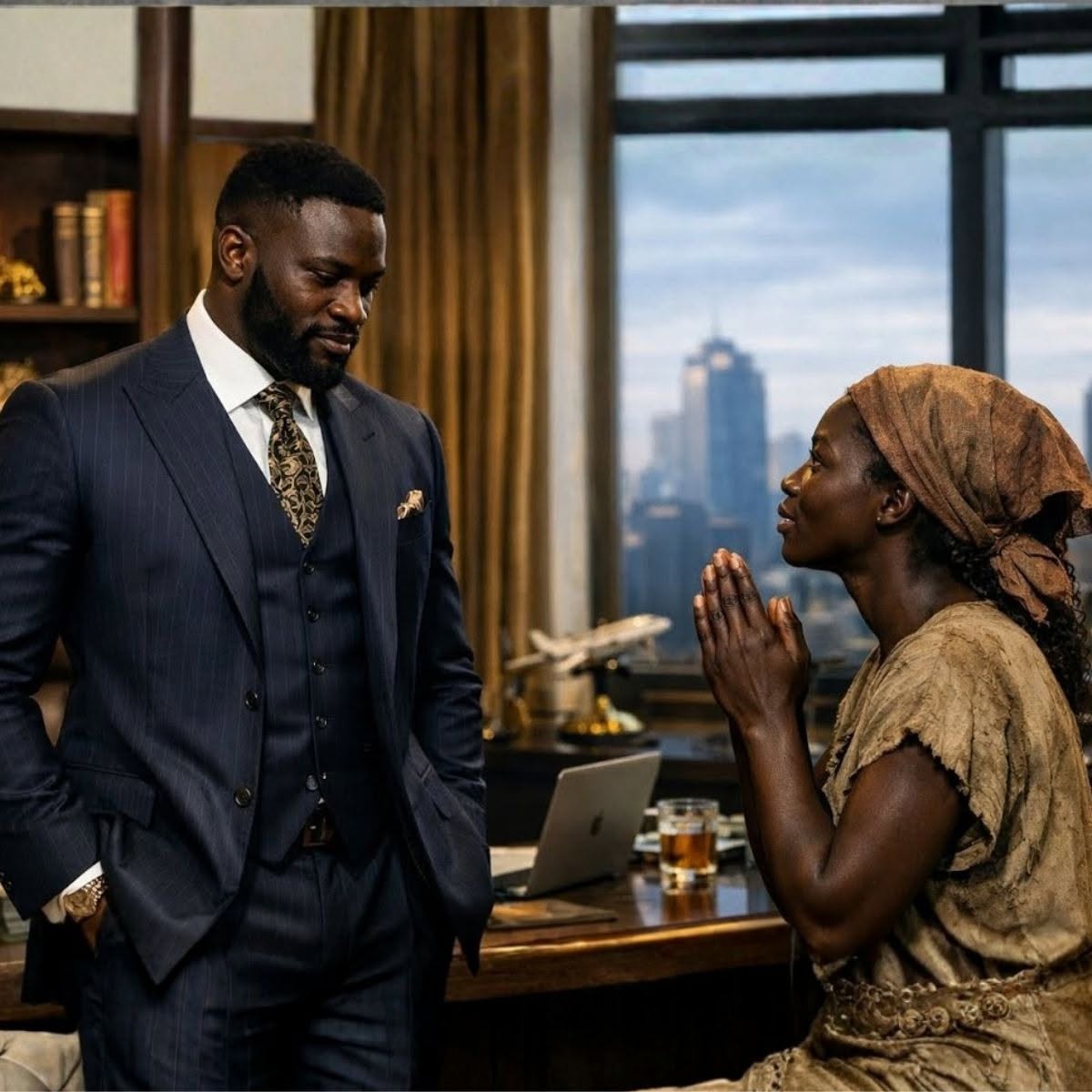
« S’IL VOUS PLAÎT, MONSIEUR, DONNEZ-MOI UNE CHANCE ! » Cette jeune orpheline arrive en retard à son entretien d’embauche… Mais lorsque le PDG milliardaire aperçoit son visage, il reste figé de stupeur !
POOR ORPHAN ARRIVED LATE FOR AN INTERVIEW—THE CEO SAW HER AND FELL IN LOVE WITH HER
 Chapter 1: The Girl Nobody Came to Claim
On a bitter winter morning in a quiet European city, the first train had not yet arrived when an aging railway cleaner noticed a small basket near the iron gates.
Inside lay a newborn wrapped in a faded shawl, her tiny breaths forming soft clouds in the freezing air. There was no note, no name, and no sign that anyone intended to return.
The cleaner immediately called the authorities.
By noon, the infant had been registered into the system as Cynthia Walter—a surname borrowed from paperwork, not heritage.
From her very first hour, life taught her a silent truth: she belonged to no one but herself.
The orphanage that received her stood on the edge of the city, a gray stone building that seemed untouched by warmth. Its corridors smelled of old books, disinfectant, and boiled vegetables. The windows rattled whenever winter winds swept through the streets.
Yet Cynthia grew into a strangely calm child.
She rarely cried, watched everything with observant eyes, and learned early how to occupy little space. Caregivers described her as self-contained—the kind of child who did not demand affection but somehow deserved it the most.
While other children fought over toys, Cynthia preferred windows.
She watched snowfall, changing seasons, and families walking past the gates with shopping bags and children holding their parents’ hands.
Sometimes, she imagined that one of those people might suddenly stop, look toward the orphanage, and recognize her.
But no one ever did.
As she grew older, one question quietly shaped her identity.
If no one came for me, does that mean I was never worth looking for?
She never asked the caregivers that question. She was afraid of hearing an answer.
Instead, she made promises to herself.
I will not be weak.
I will not be forgotten.
And one day, I will build a life that nobody can take away from me.
At school, Cynthia excelled. Knowledge became her ladder out of invisibility. She studied beneath dim hallway lights when the electricity failed in her room, borrowed books from teachers, and completed assignments long after the other children had fallen asleep.
She did not dream of expensive dresses or a grand house.
She dreamed of opening her own front door and knowing that nobody could order her to leave.
By thirteen, she had also learned to comfort other children.
She braided nervous girls’ hair before school, read bedtime stories to toddlers, and sat beside anyone who cried after another family left without choosing them.
Cynthia understood rejection too well to let another child face it alone.
She had no family of her own, but she possessed something the world had not managed to steal from her.
Her kindness.
And that kindness would eventually change the life of a man who believed he had everything.
Chapter 2: The Boy Beneath the Elm Tree
Daniel Theodore arrived at the orphanage school when Cynthia was fourteen.
He was a scholarship student from a nearby low-income district. His clothes were worn but clean, his shoes had been repaired several times, and his eyes held the restless energy of someone who refused to accept the life he had been given.
On his first day, a misunderstanding left him without lunch.
While the other students ate, Daniel sat alone at the back of the classroom, pretending to be occupied with his notebook.
Cynthia noticed.
She walked over, placed half of her bread beside him, and returned to her seat without saying a word.
Daniel stared at the bread.
“You don’t have to do that,” he told her.
“I know.”
“Then why did you?”
Cynthia shrugged.
“Because I know what it feels like to be hungry while everyone else has enough.”
Daniel said nothing for several seconds.
Then he broke the bread in half again and pushed a piece back toward her.
“Then we can both be hungry together.”
Cynthia laughed.
It was the first time Daniel had heard her laugh, and something about that small, unexpected sound stayed with him for the rest of the day.
Their friendship grew naturally.
Daniel possessed a restless intelligence, constantly sketching inventions and business ideas in the margins of his notebooks. He dreamed of building a company that would create jobs for people who had been overlooked by society.
Cynthia admired his fearless thinking.
Daniel admired her steadiness.
Where he was fire, she was an anchor.
They studied together beneath a large elm tree in the school courtyard. Daniel would talk for hours about technology, business, and the kind of future he intended to build.
Cynthia listened patiently, occasionally pointing out flaws in his plans.
“You can’t start a company with nothing,” she told him one afternoon.
Daniel grinned.
“Then I’ll start with an idea.”
“And when the idea fails?”
“I’ll find another one.”
“And when that one fails?”
He leaned closer.
“Then you’ll help me think of a better one.”
She rolled her eyes, but she could not hide her smile.
For the first time, Cynthia felt seen rather than overlooked.
Daniel never treated her as a girl without a family. He never asked why nobody had adopted her or suggested that her past made her less valuable.
To him, she was simply Cynthia.
Perceptive, stubborn, generous, and far more courageous than she realized.
By sixteen, their bond had deepened into something tender yet unspoken.
One evening, after a school exhibition, they wandered through glowing streets alive with music and traffic. They eventually stopped on a bridge overlooking the river.
The water reflected the city lights like scattered stars.
Daniel rested his elbows on the railing.
“One day, I’m going to become someone important,” he said.
Cynthia looked at him.
“You’re already important to someone.”
He turned toward her.
“Who?”
She suddenly became fascinated by the river.
“Don’t make me say it.”
Daniel smiled, but he did not tease her.
Instead, he reached into his pocket and pulled out a small silver keychain shaped like a star.
“It isn’t expensive,” he admitted. “I bought it with money from my weekend job.”
Cynthia accepted it carefully.
“Why are you giving this to me?”
“Because whenever I look at the sky, I think about how far away the stars seem. But they’re still there, even when clouds cover them.”
He paused.
“That’s what I think about when I see you. The world may not see you properly, Cynthia, but that doesn’t mean you aren’t extraordinary.”
Her eyes filled with tears.
Nobody had ever spoken to her like that.
Daniel took a nervous breath.
“When I find my place in the world, I’ll come back for the people who believed in me.”
Cynthia closed her fingers around the little star.
“Then don’t forget me when everything changes.”
Daniel looked directly into her eyes.
“I could never forget you.”
Neither of them knew how quickly everything would change.
Chapter 3: The Promise That Broke
The following year, Daniel received an opportunity that seemed impossible.
A prestigious technology foundation had selected him for an international scholarship. The program would cover his university education and connect him with influential entrepreneurs.
For a boy who had grown up struggling to afford school supplies, it was a miracle.
Everyone congratulated him.
Everyone except Daniel, who spent the afternoon searching for Cynthia.
He found her in the orphanage garden, helping a younger girl repair a broken flowerpot.
“I got it,” he said breathlessly.
Cynthia stood.
“The scholarship?”
He nodded, his face glowing with excitement.
For a moment, she felt nothing but happiness for him.
Then she realized what it meant.
He would leave the city.
He would meet new people, discover new opportunities, and enter a world she could barely imagine.
“When do you leave?” she asked.
“Next month.”
She lowered her eyes.
“That’s wonderful, Daniel.”
He immediately noticed the sadness in her voice.
“Come with me.”
Cynthia stared at him.
“What?”
“Not immediately. But after I settle in, I’ll find a way to help you continue your education. You deserve the same opportunities I have.”
She shook her head.
“You can’t spend your life trying to rescue me.”
“I’m not trying to rescue you.”
“Then what are you doing?”
Daniel hesitated.
He wanted to tell her that he loved her. He wanted to promise that he would return, take her hand, and never let her feel abandoned again.
But he was seventeen, frightened by the size of his dreams, and uncertain how to build a future for two people when he could barely build one for himself.
“I’m trying to make sure you have a future,” he finally said.
Cynthia smiled sadly.
“I already have one. I just have to build it myself.”
They argued that afternoon for the first time.
Daniel thought she was pushing him away.
Cynthia thought he was making promises he might never be able to keep.
Neither understood that both were frightened of losing the only person who had ever made them feel understood.
On the day he left, Daniel waited outside the orphanage gates with his suitcase.
Cynthia came running just before the car departed.
She placed a folded piece of paper in his hand.
“Don’t open it until you arrive.”
Daniel wanted to hug her, but the driver was already calling him.
“I’ll write,” he promised.
“I know.”
“I’ll call.”
“I know.”
“And I’ll come back.”
Cynthia swallowed the lump in her throat.
“Then make sure you have something worth coming back for.”
Daniel climbed into the car.
As it pulled away, he pressed his forehead against the window and watched her become smaller in the distance.
He opened the letter that evening.
Inside, Cynthia had written only one sentence.
When the world finally knows your name, remember the girl who knew your heart before anyone knew your name.
Daniel kept that letter for years.
But life, as it often does, had other plans.
Chapter 4: Two Lives, Two Different Battles
Daniel’s first years abroad were difficult.
The scholarship covered his tuition, but it did not cover every expense. He worked evenings in a restaurant, slept only a few hours each night, and studied until his eyes burned.
He made mistakes.
He lost money on his first business project. A mentor abandoned him after promising to invest. A business partner stole an idea and presented it as his own.
There were nights when Daniel considered giving up.
Whenever that happened, he took Cynthia’s letter from his wallet and read it again.
Remember the girl who knew your heart before anyone knew your name.
He remembered the bread she had shared with him.
He remembered her stubborn determination and the way she refused to pity herself.
And he kept going.
Meanwhile, Cynthia was building her own future.
She graduated near the top of her class and earned a place at a local university through a scholarship. She studied business administration while working evenings at a small bakery.
Some nights, she returned to the orphanage so late that the staff had already locked the front doors. She would quietly wake the night supervisor, apologize, and climb the stairs to her narrow bed.
She sent Daniel messages whenever she could.
At first, he answered quickly.
Then his replies became less frequent.
His university workload increased. His first startup demanded every spare hour. His phone number changed when he moved apartments, and several messages failed to reach him.
Cynthia did not know that Daniel had also been trying to contact her.
The orphanage had changed its administrative system, and her old email account was deactivated. Letters he sent to the building were returned after the organization moved to a different address.
Eventually, both assumed the other had moved on.
Neither knew how many times the other had stared at an unanswered message.
Years passed.
Daniel’s first successful business attracted investors. His second company expanded across Europe. At thirty, he became the founder and chief executive officer of Theodore Global, a technology and logistics corporation with thousands of employees.
Financial magazines described him as a brilliant entrepreneur.
Business leaders called him disciplined, calculating, and impossible to intimidate.
His photograph appeared on magazine covers beside headlines about his growing fortune.
But Daniel never felt completely satisfied.
He had the penthouse, the expensive cars, the private office overlooking the city, and the freedom to travel wherever he wanted.
Yet there was one promise he had never fulfilled.
He had never returned for Cynthia.
He did not know where she lived, whether she was happy, or whether she had found someone who treated her the way she deserved.
Sometimes, he searched her name online.
The results were always disappointing.
Cynthia Walter was not an uncommon name, and without a location or a recent photograph, he could not be certain which person was the girl he remembered.
Eventually, he buried himself in work.
It was easier to build another company than to face the possibility that the person he had promised never to forget might have forgotten him.
Cynthia, meanwhile, had graduated with excellent marks.
But her degree did not magically erase the disadvantages she faced.
She had no influential relatives, no family friend who could recommend her for a prestigious position, and no financial safety net.
She applied for dozens of jobs.
Some companies rejected her without an interview.
Others offered temporary contracts that paid barely enough to cover her expenses.
Still, she refused to give up.
She believed that somewhere, an opportunity existed that would allow her to prove what she could do.
She simply needed someone willing to look beyond her circumstances.
She never imagined that the person who would finally do so was the boy beneath the elm tree.
Chapter 5: The Interview That Almost Never Happened
On a cold Monday morning, Cynthia received an email that made her heart race.
Theodore Global was recruiting a junior executive assistant for its chief executive’s strategic operations team.
The position was competitive, the salary was significantly higher than anything she had earned before, and the company offered opportunities for professional development.
Cynthia had spent three nights preparing her application.
She researched the company’s history, studied its recent projects, and rewrote her résumé until every sentence clearly demonstrated her skills.
She knew she did not have the connections many other applicants possessed.
But she had experience, discipline, and an extraordinary willingness to learn.
Two days later, she received an interview invitation.
For the first time in months, she allowed herself to imagine a different life.
She could leave the bakery job.
She could rent a small apartment of her own.
She could finally stop worrying about whether an unexpected expense would consume her savings.
On the morning of the interview, Cynthia woke before sunrise.
She ironed her only formal blouse, cleaned her black trousers, and polished the shoes she had purchased secondhand.
She placed three copies of her résumé in a folder and checked the address twice.
Then she left early.
Unfortunately, the city had other plans.
A serious accident blocked the main road. Buses were delayed, taxis crawled through traffic, and hundreds of commuters crowded the pavements.
Cynthia checked her watch repeatedly.
Twenty minutes before the interview, she was still several kilometers away.
Fifteen minutes.
Ten minutes.
Her hands began to tremble.
She called the company’s recruitment office, but the line was busy.
When her bus finally moved, it stopped again after barely a minute.
Cynthia could feel the opportunity slipping away.
She got off and ran.
She ran past a row of shops, crossed two crowded streets, and hurried up the steps of Theodore Global’s headquarters.
By the time she reached the revolving doors, her breathing was uneven and her hair had escaped its neat arrangement.
She looked at the clock.
She was twelve minutes late.
For a moment, she stood outside the glass entrance, wondering whether she should simply turn around.
She could already imagine the receptionist shaking her head.
You are too late.
She could imagine another rejection email arriving before dinner.
Then she remembered the little silver star Daniel had given her.
She still carried it on her keychain.
Cynthia closed her hand around it.
“I didn’t come this far to walk away,” she whispered.
Then she stepped inside.
Chapter 6: “Please, Sir, Give Me a Chance”
Theodore Global’s lobby was breathtaking.
Polished marble stretched beneath towering windows. A sculptural chandelier hung above the reception desk, and a wall displayed photographs of the company’s international projects.
Employees moved through the building with tablets and coffee cups, speaking confidently about meetings and deadlines.
Cynthia felt painfully out of place.
She approached the receptionist, trying to steady her breathing.
“Good morning. My name is Cynthia Walter. I have an interview scheduled for the executive assistant position.”
The receptionist checked the computer.
“Your interview was scheduled for nine o’clock.”
“I know. I’m very sorry. There was a serious traffic accident, and the buses were delayed. I tried calling, but I couldn’t get through.”
The receptionist looked at the clock.
“It’s nine twelve.”
“I understand.”
“Unfortunately, our recruitment team has a strict schedule.”
Cynthia’s stomach tightened.
“Could you please let them know that I’m here? I promise I won’t waste their time.”
The receptionist hesitated before picking up the telephone.
After a short conversation, she put it down.
“I’m sorry. The recruiter has already moved to the next candidate.”
Cynthia felt the familiar sensation of a door closing before she had even entered the room.
She could have thanked the receptionist and left.
Instead, she swallowed her pride.
“Please,” she said quietly. “I understand that punctuality is important, and I’m not asking you to pretend that I wasn’t late. But I prepared for this interview for days. This opportunity means a great deal to me.”
The receptionist looked uncomfortable.
“I really can’t change the schedule.”
“Then could I leave my résumé? Even if they don’t interview me today, I’d be grateful if they considered my application.”
Before the receptionist could respond, the elevator doors opened behind them.
Several senior executives stepped into the lobby.
At the center of the group stood a tall man wearing a perfectly tailored charcoal suit.
His dark hair was neatly styled, his expression serious, and his presence commanded attention without requiring him to raise his voice.
Daniel Theodore had just returned from a meeting with international investors.
He was halfway through discussing a new expansion plan when a sentence from the reception desk stopped him.
“Please, sir. Give me a chance.”
The words struck him with an inexplicable familiarity.
He turned.
A young woman stood beside the desk, holding a folder against her chest. Her cheeks were flushed from running, and a few strands of hair had fallen across her face.
She was clearly nervous.
But she was not begging for money or special treatment.
She was asking for a chance to work.
Daniel looked at her.
Something about her eyes, her expression, and the way she held her shoulders sent a strange feeling through his chest.
Then she looked up.
Their eyes met.
For a second, the lobby seemed to disappear.
Daniel forgot the executives beside him.
He forgot the meeting waiting upstairs.
All he could see was a pair of eyes he had not seen in more than a decade.
“Cynthia?” he whispered.
The young woman froze.
Nobody at the reception desk moved.
Cynthia stared at him, uncertain whether she had heard correctly.
The man before her looked nothing like the boy she remembered. The expensive suit, the confident posture, and the quiet authority belonged to someone who had built an entirely different life.
But there was something unmistakable in his eyes.
“Daniel?” she breathed.
His expression changed.
He took a step toward her, then another.
For years, he had imagined what he would say if he ever found her again.
He had rehearsed apologies, explanations, and promises.
Now that she stood before him, he could barely speak.
“You came here for an interview?” he asked.
Cynthia glanced at the receptionist, then back at him.
“Yes. I’m sorry I’m late.”
Daniel almost laughed—not because the situation was amusing, but because the girl who had once shared her bread with him was standing in his headquarters apologizing for being twelve minutes late.
He looked at the folder in her hands.
Then he looked at her face.
And in that moment, he realized that the feelings he had buried beneath years of ambition had never truly disappeared.
They had simply been waiting.
Chapter 7: The CEO Makes an Unexpected Decision
One of the executives cleared his throat.
“Mr. Theodore, your next meeting is scheduled to begin in five minutes.”
Daniel barely glanced at him.
“Reschedule it.”
The executive blinked.
“Sir?”
“Reschedule the meeting.”
Daniel turned toward the receptionist.
“Please arrange a private interview room. And inform the recruitment team that I’ll be conducting this interview personally.”
The receptionist’s eyes widened.
“Of course, Mr. Theodore.”
Cynthia stared at him.
“You’re the CEO?”
Daniel looked at her with a faint smile.
“I was going to ask you the same thing about your application.”
She shook her head in disbelief.
“I didn’t know.”
“I can see that.”
He gestured toward the elevators.
“Come with me.”
Cynthia hesitated.
“Daniel, I don’t want special treatment because we knew each other.”
His smile faded into something more serious.
“Then you won’t receive any.”
He held her gaze.
“You’ll receive an interview. If your qualifications meet the requirements, you’ll be considered. If they don’t, you won’t be hired. Is that fair?”
Cynthia nodded slowly.
“Yes.”
“Good.”
He paused.
“But first, I need to ask you something.”
“What?”
“Are you really going to make me wait another ten years before we have a proper conversation?”
Her eyes filled with tears.
She looked away before he could see them.
“I thought you had forgotten me.”
Daniel’s expression became painfully still.
“I never forgot you.”
He led her to a quiet conference room overlooking the city.
For the next forty minutes, they spoke about her education, work experience, and professional ambitions. Daniel asked challenging questions, and Cynthia answered honestly.
She admitted what she did not know.
She explained what she had learned.
When he presented her with a complicated scheduling problem, she carefully broke it into smaller tasks and explained how she would prioritize them.
Daniel was impressed.
Not because he wanted to reward a childhood friend, but because she was genuinely capable.
She had strong organizational instincts, clear communication skills, and the ability to remain thoughtful under pressure.
At the end of the interview, he closed his notebook.
“One final question.”
Cynthia straightened in her chair.
“Yes?”
“Why do you want this job?”
She considered her answer.
“I want stability. I want to build a career based on my abilities rather than spend my life wondering whether I’ll be given another temporary opportunity.”
Daniel listened without interrupting.
“And I want to work somewhere I can learn,” she continued. “I don’t expect anyone to make things easy for me. I only want the chance to prove that I’m worth investing in.”
He looked at her for a long moment.
Then he smiled.
“That’s the best answer I’ve heard today.”
Cynthia’s face warmed.
“Does that mean I got the job?”
“It means you passed the interview.”
He stood.
“The recruitment team will review your application, and you’ll receive a formal offer if everything checks out.”
She nodded, trying to hide her relief.
“Thank you, Mr. Theodore.”
Daniel raised an eyebrow.
“Mr. Theodore?”
“You’re my potential employer.”
“And you’re the girl who once told me that I would never succeed if I kept putting terrible business ideas in my notebooks.”
Cynthia finally laughed.
“Because your ideas were terrible.”
“Some of them became profitable companies.”
“Some of them.”
For the first time that morning, Daniel laughed too.
The sound reminded Cynthia of the boy beneath the elm tree.
And suddenly, the distance between their past and present did not seem quite so impossible to cross.
Chapter 8: A Job, a Secret, and an Unexpected Feeling
Cynthia received the official job offer three days later.
The recruitment team confirmed that she had met the position’s requirements, and her references were satisfactory.
The salary was more than double what she earned at the bakery.
She read the offer letter three times before believing it.
Then she sat on the edge of her bed in the orphanage’s former residents’ accommodation and cried.
Not because she was unhappy.
Because, for the first time in years, she could see a future that did not depend on surviving one difficult month after another.
Her first day at Theodore Global began the following Monday.
She arrived forty minutes early.
When Daniel saw her enter the executive floor, he glanced at his watch.
“You’re early.”
Cynthia placed her bag on the desk.
“I learned my lesson.”
“Good. I was beginning to worry that my company had hired a professional traffic enthusiast.”
She threw him a look.
“Keep talking, Mr. Theodore. I’ll put your meetings at six in the morning.”
Daniel laughed.
Their professional relationship began with teasing, but Cynthia quickly discovered that the CEO was far more demanding than the boy she remembered.
He expected accuracy, discretion, and preparation.
He reviewed her work carefully and corrected mistakes without humiliating her.
When she performed well, he acknowledged it.
When she made an error, he explained how to fix it.
He never treated her as a charity case.
That mattered to Cynthia more than he knew.
Within weeks, she became one of the most reliable members of his office.
She noticed scheduling conflicts before they became problems, remembered details from meetings, and developed an efficient system for tracking important projects.
Daniel began trusting her with increasingly complex assignments.
But something else was happening.
He found himself looking forward to their conversations.
He noticed that she always thanked the cleaning staff by name. He noticed that she brought extra sandwiches to the office on days when the interns worked late. He noticed that she never used her position to make herself feel more important than anyone else.
One evening, he returned from a difficult negotiation to find Cynthia sitting at her desk, reviewing a report.
“You’re still here?” he asked.
She looked up.
“I needed to finish the presentation for tomorrow.”
“You could have finished it in the morning.”
“I could have. But the figures weren’t matching, and I wanted to understand why.”
Daniel placed his briefcase down.
“You know you don’t have to prove yourself every single day, don’t you?”
Cynthia’s expression became thoughtful.
“Maybe not. But when you’ve spent your whole life being told that opportunities are limited, you learn not to waste them.”
He pulled a chair beside her desk.
“And who told you that?”
“Life.”
She said it lightly, but he heard the truth beneath her words.
For a moment, neither spoke.
Then Daniel asked, “Do you ever wish things had been different?”
Cynthia considered the question.
“Sometimes. I wonder who my parents were. I wonder why they left me. But I don’t spend as much time asking those questions anymore.”
“Why not?”
“Because I can’t change the beginning of my story. I can only decide what happens next.”
Daniel looked at her.
He had spent years believing that success meant controlling every variable, predicting every risk, and ensuring that nothing unexpected could hurt him.
Cynthia had taught him something different.
Strength did not mean avoiding pain.
It meant refusing to let pain decide who you became.
And somewhere between their late-night conversations, shared lunches, and quiet moments after difficult meetings, Daniel began falling in love with her.
Not with the memory of the girl he had known.
With the woman she had become.
Chapter 9: The Woman Who Challenged the CEO
Not everyone at Theodore Global welcomed Cynthia’s arrival.
Among the most suspicious was Victoria Ashford, the company’s chief financial officer.
Victoria had spent years climbing the corporate ladder. She believed that every position should be earned through established networks, carefully managed relationships, and unquestioning loyalty to the company’s senior leadership.
She noticed how frequently Daniel consulted Cynthia.
She noticed how he listened when Cynthia challenged a proposal.
And she noticed that, unlike most employees, Cynthia was not intimidated by the CEO.
One afternoon, Victoria entered Daniel’s office without knocking.
“I hope you’re aware of the rumors circulating about your new assistant.”
Daniel continued reading a report.
“What rumors?”
“That she received special treatment because of your personal history.”
He closed the report.
“She went through the recruitment process.”
“With you personally conducting the interview.”
“After I discovered that I knew her.”
Victoria folded her arms.
“People will draw their own conclusions.”
“Then perhaps we should give them facts.”
Daniel stood.
“Cynthia met the requirements for the role. Her work is documented, her performance is measurable, and every decision involving her employment can be reviewed by HR.”
Victoria’s expression tightened.
“I am simply protecting the company’s reputation.”
“Then protect it by focusing on your responsibilities rather than spreading speculation about an employee.”
Victoria left with a rigid smile.
But she was not finished.
The following week, a major client threatened to withdraw from a multimillion-euro partnership after receiving a proposal containing incorrect figures.
The mistake had originated in a financial report prepared by Victoria’s department, but the final document had passed through several offices before reaching the client.
Victoria immediately blamed Cynthia.
“She prepared the executive briefing,” she announced during an emergency meeting. “If she had checked the numbers properly, this would never have happened.”
Several executives turned toward Cynthia.
She felt every eye in the room.
A year earlier, she might have apologized simply to avoid conflict.
This time, she opened her laptop.
“I reviewed the briefing before it was sent,” she said calmly. “The figures in my version matched the approved report. The numbers were changed after the document left my office.”
Victoria’s eyes narrowed.
“Are you accusing someone of altering company records?”
“I’m saying we should review the document history before assigning responsibility.”
Daniel watched her carefully.
Cynthia was frightened, but she did not retreat.
The IT department examined the records.
Within an hour, the evidence revealed that the figures had been modified by an account within the finance division after Cynthia had completed her review.
The alteration had been accidental, caused by an outdated spreadsheet being copied into the final document.
Victoria had not deliberately sabotaged the proposal, but she had blamed Cynthia before investigating the facts.
Daniel addressed the issue firmly.
The company corrected the proposal, apologized to the client, and introduced a new verification process.
After the meeting, Cynthia stood alone beside the conference room window.
Daniel approached her.
“You handled that well.”
She exhaled.
“I was terrified.”
“You didn’t look terrified.”
“That is because I was trying very hard not to look terrified.”
He smiled.
Then his expression softened.
“You didn’t have to defend yourself alone.”
Cynthia looked at him.
“I know. But I wanted to know that I could.”
Daniel nodded.
He understood.
She did not want him to become the powerful man who rescued her from every difficulty.
She wanted to stand beside him as an equal.
And that was precisely why he admired her.
Chapter 10: The CEO’s Invitation
Several weeks later, Theodore Global hosted its annual charity gala.
The event raised funds for educational programs, employment training, and organizations supporting children without stable family care.
Cynthia had helped coordinate the event from the beginning.
She worked with the organizers, reviewed the guest list, managed schedules, and ensured that representatives from the partner charities received the attention they deserved.
On the evening of the gala, she arrived wearing a simple dark-blue dress.
It was not expensive, but it fit beautifully.
Her hair was pinned back, and the little silver star still hung from her keychain inside her handbag.
Daniel saw her from across the ballroom.
For several seconds, he forgot the conversation he was having.
Cynthia looked different from the nervous young woman who had arrived late for her interview.
She stood confidently among business leaders and philanthropists, speaking with a charity director about expanding educational opportunities for disadvantaged children.
She did not appear to be pretending to belong.
She belonged because she had earned her place.
When she finally noticed Daniel watching her, she approached him.
“Is something wrong?”
“No.”
“Then why are you looking at me like that?”
He hesitated.
“Because I think I owe you an apology.”
Cynthia blinked.
“For what?”
“For the years I wasn’t there.”
Her expression changed.
Daniel continued before he could lose his courage.
“I promised I would come back. I told you I would never forget you, and then I let work, distance, and excuses become more important than keeping that promise.”
“You were building your life.”
“That doesn’t mean I handled everything well.”
He looked down at his hands.
“I searched for you. I tried to find you online, but there were too many people with your name. I sent letters to the orphanage, but they came back. Eventually, I convinced myself that you had moved on.”
Cynthia listened quietly.
“I thought you had forgotten me too,” she admitted.
Daniel’s face tightened.
“I’m sorry.”
She studied him for a moment.
Then she smiled faintly.
“We were young, Daniel. We both thought the world would wait until we were ready.”
He looked up.
“Can you forgive me?”
Cynthia did not answer immediately.
Forgiveness, she had learned, was not the same as pretending nothing had happened.
But she no longer wanted to punish the past for taking away something neither of them had known how to protect.
“I forgave you a long time ago,” she said. “I just didn’t know where to send the forgiveness.”
Daniel let out a breath that sounded almost like a laugh.
For the first time in years, the ache inside his chest began to loosen.
Then he extended his hand.
“Would you dance with me?”
Cynthia stared at him.
“You are the CEO of a company hosting a charity gala. Shouldn’t you be talking to investors?”
“I’ve spent the entire evening talking to investors.”
“And now?”
“Now, I’m asking a woman to dance.”
She placed her hand in his.
“Then try not to step on my feet, Mr. Theodore.”
“I make no promises.”
They moved onto the dance floor as the orchestra began a slow melody.
Daniel held her carefully, leaving enough space between them for her to feel comfortable.
Cynthia looked up at him.
“You’ve changed.”
“So have you.”
“You’re much more serious.”
“You’re much more difficult to impress.”
She laughed softly.
“Maybe you should try harder.”
Daniel smiled.
He intended to.
Chapter 11: “I Don’t Want to Be Your Charity Case”
Their relationship deepened over the following months.
They began having dinner together after work, first in quiet restaurants and later in small cafés that reminded them of the city where they had grown up.
Daniel told her about his failures, the people who had betrayed him, and the loneliness of becoming successful before learning how to enjoy his own life.
Cynthia told him about the nights she had cried silently in the orphanage, the fear of being unwanted, and the exhausting experience of having to appear strong because there was nobody else to rely on.
Neither tried to make the other feel guilty for the past.
Instead, they learned to listen.
One evening, Daniel invited Cynthia to his penthouse.
She hesitated at the entrance.
The apartment was beautiful, with floor-to-ceiling windows overlooking the river, carefully selected artwork, and a dining table large enough for a dozen guests.
But Cynthia felt uneasy.
She had spent her childhood watching wealthy families walk past the orphanage gates. She had learned to associate expensive surroundings with a world in which she was never expected to belong.
Daniel noticed her silence.
“Do you dislike it?”
“No.”
“Then what is it?”
Cynthia looked toward the windows.
“I don’t know how to be in a place like this without feeling that I might break something.”
He walked closer.
“You could never break anything here that matters more than you do.”
She turned toward him.
“Please don’t say things like that just because you feel sorry for me.”
His expression changed immediately.
“Cynthia, I don’t feel sorry for you.”
“Sometimes I wonder if you see me as the girl you left behind. The girl who needed someone to protect her.”
Daniel was silent.
She continued, her voice trembling slightly.
“I spent years building a life for myself. I don’t want to become the woman everyone thinks you rescued. I don’t want people saying I got my job because I knew you, or that you fell in love with me because you remembered a lonely girl from your childhood.”
Daniel took a slow breath.
“Then let me be very clear.”
He moved closer but did not touch her.
“I fell in love with the woman who challenged me when I was wrong. The woman who worked until midnight because she wanted to understand a problem. The woman who stood in front of a room full of executives and defended herself with facts when she was frightened.”
Cynthia’s eyes filled with tears.
“I fell in love with the woman who remembers the names of people everyone else ignores,” he continued. “The woman who could have used our history to demand favors but refused to do so.”
He paused.
“I knew you when we were children. But I fell in love with you again as an adult.”
She looked at him for a long moment.
“And what happens if I never become as successful as you?”
Daniel frowned.
“Why would that matter?”
“Because your world is full of powerful people.”
“And I spend most of my time trying to find people who tell me the truth.”
“What if I never want a penthouse or expensive cars?”
“Then we’ll live somewhere smaller.”
“What if I want to keep working?”
“Then you’ll keep working.”
She gave a small, tearful laugh.
“You make everything sound easy.”
“No,” Daniel said gently. “I know it won’t always be easy. I’m just telling you that I don’t want a woman who needs me to build her life. I want a woman who chooses to share the life she’s building.”
Cynthia looked down at her hands.
For most of her life, she had feared that love would come with a hidden price.
Now, for the first time, she wondered whether it could be offered without asking her to become someone else.
She reached for his hand.
“Then I want to choose you,” she whispered.
Daniel’s eyes softened.
“Are you sure?”
She nodded.
“Yes.”
He leaned toward her slowly, giving her every opportunity to step away.
She did not.
Their first kiss was gentle, almost hesitant, carrying the weight of years spent apart and the hope of everything still ahead.
When they finally separated, Daniel rested his forehead against hers.
“I’ve wanted to do that since we were seventeen.”
Cynthia smiled through her tears.
“You should have said something.”
“I was seventeen. I thought giving you a cheap keychain was a sophisticated romantic gesture.”
She laughed.
“It was terrible.”
“You kept it.”
“Unfortunately.”
For the first time in his life, Daniel felt that he had found something more valuable than success.
He had found someone who knew him before the world began applauding him.
And she loved him without needing the applause.
Chapter 12: The Past Returns
Just when Cynthia began to believe that her life was finally settling into something secure, an unexpected letter arrived.
It came from a legal office representing a woman named Eleanor Walter.
The letter explained that Eleanor had recently passed away and that a personal document had been discovered among her belongings.
The document mentioned a newborn girl left near a railway station decades earlier.
The girl’s name, according to the records, had been Cynthia.
Cynthia read the letter several times.
For years, she had imagined discovering the truth about her parents.
Now that the possibility had arrived, she felt terrified.
She contacted the legal office and arranged a meeting.
Daniel offered to accompany her, but she asked to go alone.
“I need to do this for myself,” she explained.
He understood, although he wished he could spare her the uncertainty.
At the meeting, a lawyer handed Cynthia a sealed envelope containing a handwritten letter.
The handwriting was delicate and uneven.
The letter began:
To the little girl I have thought about every day.
Cynthia’s hands began to shake.
The woman who had written it, Eleanor, had worked as a nurse at a small medical clinic. Years earlier, she had discovered that a young mother had died shortly after giving birth, leaving behind an infant whose father could not be located.
The mother had been frightened, isolated, and without family support.
In the confusion following the birth, the baby had been transferred through several temporary arrangements before being left at the railway station by someone whose identity was never established.
Eleanor had tried to investigate the case but had been unable to establish what happened to the child.
The letter did not reveal the identity of Cynthia’s biological parents.
It did, however, contain a detail that made her breath catch.
The newborn had been wrapped in a faded shawl with a tiny embroidered star sewn into one corner.
Cynthia remembered the old shawl only from a photograph in her childhood records.
She had never known what the star meant.
At the bottom of the letter, Eleanor had written:
If you are the girl I have spent so many years hoping to find, please know that your beginning was not your fault. You were never abandoned because you lacked worth. You were a child in the middle of circumstances that adults failed to handle properly.
Cynthia pressed the letter to her chest and wept.
For years, she had believed that someone had deliberately decided she was not worth keeping.
Now, for the first time, she understood that the truth might be more complicated than the story she had told herself.
She left the legal office with unanswered questions, but something inside her had changed.
She was no longer searching for proof that she deserved to be loved.
She knew she did.
When she arrived at Daniel’s apartment that evening, he opened the door and immediately saw the tears in her eyes.
He did not ask questions.
He simply held her.
After a long silence, she told him everything.
Daniel listened without interrupting.
When she finished, he brushed a tear from her cheek.
“You don’t have to solve your entire past in one day.”
Cynthia nodded.
“I know.”
“And you don’t have to face the next part alone.”
She looked at him.
“I know that too.”
For the first time, the words felt true.
Chapter 13: The CEO’s Greatest Risk
As Theodore Global continued to expand, Daniel faced one of the most difficult decisions of his career.
A powerful investment group offered to acquire a controlling stake in the company.
The deal promised enormous financial returns, but it also included plans to close several smaller regional offices and eliminate hundreds of jobs.
Daniel was reluctant.
Those offices served communities that had struggled to attract investment for years. Many employees had built their lives around the company, and the proposed closures would leave some towns with few alternative employers.
The investment group argued that the cuts were necessary.
Victoria, who had learned from her earlier mistake, presented a careful analysis of the financial risks.
Cynthia was not involved in the negotiations, but she noticed Daniel becoming increasingly withdrawn.
One evening, she found him in his office, staring at the city.
“You’re thinking about the acquisition again,” she said.
He turned.
“How did you know?”
“Because you’ve read the same page of that report for twenty minutes.”
He smiled faintly.
“I have to make a decision that affects thousands of people.”
“And you don’t want to hurt them.”
“I also have a responsibility to protect the company.”
Cynthia sat opposite him.
“Maybe the question isn’t whether you can avoid every difficult consequence. Maybe it’s whether you can find a solution that doesn’t make vulnerable people pay the highest price.”
Daniel studied her.
“What would you do?”
“I’d ask whether the closures are truly necessary, whether the company can restructure gradually, and whether the investors would accept a different plan.”
He considered this.
“You make it sound obvious.”
“It isn’t obvious. It just deserves to be examined.”
Daniel spent the next several days reviewing alternatives.
He consulted independent analysts, met with regional managers, and negotiated with the investment group.
Eventually, he presented a revised proposal that reduced unnecessary spending without immediately closing the regional offices.
The negotiations were difficult.
The investors threatened to withdraw.
Daniel refused to approve the original deal simply because it was profitable.
After weeks of uncertainty, the parties reached a compromise.
Theodore Global secured the investment it needed, while the most damaging proposed cuts were avoided through a phased restructuring plan.
The company did not escape every difficult decision, but hundreds of employees were given more time and support to transition where changes were unavoidable.
When the agreement was finalized, Daniel returned home exhausted.
Cynthia was waiting for him with dinner.
“Did you win?” she asked.
He loosened his tie.
“I think we found a way forward.”
She smiled.
“That sounds better than winning.”
He looked at her across the table.
“You know something? Before I met you again, I thought being a good CEO meant having the courage to make unpopular decisions.”
“And now?”
“Now I think it also means having the patience to question whether those decisions are right.”
Cynthia reached across the table and took his hand.
“You’re learning.”
He laughed.
“From the most demanding teacher I’ve ever had.”
She smiled.
“Your tuition is expensive.”
“How expensive?”
She pretended to consider the question.
“Dinner. Every Friday. No business calls.”
Daniel nodded solemnly.
“I accept the terms.”
Then he leaned across the table and kissed her.
For once, neither of them had anywhere else they needed to be.
Chapter 14: The Truth Behind the Interview
Nearly a year after Cynthia had first arrived late at Theodore Global, the company celebrated another successful year.
During the event, Daniel stood before hundreds of employees and spoke about the people who had shaped the organization.
He praised the engineers who developed its products, the warehouse workers who kept its operations running, and the administrative teams who made its international projects possible.
Then he spoke about a lesson he had learned long before becoming a CEO.
“When I was young, someone shared half of her lunch with me because she knew what it felt like to have nothing.”
Cynthia stood near the back of the room, listening.
Daniel continued.
“She didn’t ask whether I deserved her kindness. She didn’t ask whether I would become successful. She simply saw a person who needed help.”
He paused.
“Years later, that same person walked into this building twelve minutes late for an interview.”
Laughter spread through the room.
Cynthia covered her face.
Daniel smiled.
“She was told that punctuality mattered. And it does. But that morning reminded me that rules should guide us, not prevent us from seeing the people standing in front of us.”
His expression became serious.
“I did not give Cynthia a job because I knew her. She earned that opportunity through her abilities. But meeting her again reminded me why I started this company in the first place.”
He looked across the room until he found her.
“I wanted to build something that gave people a chance to demonstrate what they could do, rather than judging them by what they lacked.”
Cynthia’s eyes filled with tears.
Daniel had never publicly discussed their personal history in such detail.
He continued.
“Talent can come from anywhere. Determination can grow in the most difficult circumstances. And sometimes, the person who arrives late is carrying a story that deserves to be heard.”
The room erupted in applause.
Cynthia did not care about the applause.
She was thinking about the frightened girl who had stood at the reception desk, convinced that one mistake had destroyed her future.
That girl had not known that the boy who once gave her a silver star was standing only a few meters away.
She had not known that her life was about to change.
But she had walked through the doors anyway.
And that had made all the difference.
Chapter 15: A Proposal Beneath the Elm Tree
On the anniversary of their first meeting as teenagers, Daniel asked Cynthia to accompany him on a trip.
He did not tell her where they were going.
They drove through the familiar streets of their childhood city until the car stopped outside the old school.
The building had been renovated, but the large elm tree still stood in the courtyard.
Cynthia stepped out of the car and stared at it.
“You brought me here?”
Daniel nodded.
“I thought we should visit the place where everything began.”
They walked beneath the branches, now thick with green leaves.
Cynthia touched the trunk.
“I used to sit here and wonder what my life would become.”
“What did you imagine?”
“Honestly? A small apartment, a steady job, and enough money to buy groceries without calculating every coin.”
Daniel smiled.
“That sounds like a good life.”
“It would have been.”
She turned toward him.
“But I never imagined this.”
He took her hands.
“Neither did I.”
For a moment, they stood quietly beneath the tree.
Then Daniel reached into his coat pocket.
Cynthia’s eyes widened when he withdrew a small box.
“Daniel…”
He opened it.
Inside lay a simple ring, elegant rather than extravagant.
“I’ve spent years building a company,” he said. “I’ve negotiated with people who seemed impossible to persuade, survived failures that I thought would destroy me, and made decisions that affected thousands of lives.”
He took a breath.
“But none of those things ever frightened me as much as standing here and asking you this question.”
Cynthia was already crying.
Daniel smiled nervously.
“I don’t want to promise you a perfect life. I can’t promise that we’ll never argue, never struggle, or never face something neither of us knows how to solve.”
He squeezed her hands gently.
“But I can promise that I will listen. I will respect your independence. I will never ask you to become smaller so that I can feel bigger.”
His voice softened.
“I loved you when we were children. I lost you when we were young. And when you walked into my office that morning, I realized that the most important person I had ever known had returned to my life.”
He lowered himself onto one knee.
“Cynthia Walter, will you marry me?”
For several seconds, she could not speak.
She thought of the railway station.
The cold basket.
The orphanage windows.
The girl who had watched families pass and wondered why nobody ever stopped.
She thought of the boy who had shared his bread, given her a little silver star, and promised to return.
Then she looked at the man kneeling before her.
The world had given him wealth, influence, and a thousand reasons to believe that he could have anything he wanted.
Yet he was waiting for her answer as if nothing else mattered.
Cynthia laughed through her tears.
“Yes.”
Daniel’s face transformed.
“Yes?”
“Yes, Daniel. I’ll marry you.”
He stood, slipped the ring onto her finger, and pulled her into his arms.
She held him tightly.
For the first time in her life, Cynthia did not feel that she was waiting to be chosen.
She felt that she had chosen her own future.
And that future had chosen to stand beside her.
Chapter 16: The Wedding That Changed Everything
Cynthia and Daniel decided not to hold an extravagant wedding.
Instead, they chose a beautiful garden overlooking the river, inviting close friends, colleagues, and the people who had supported them throughout their lives.
The orphanage director who had cared for Cynthia as a child attended.
So did several former classmates, including the schoolteacher who had once encouraged Cynthia to apply for scholarships.
Daniel’s university mentor traveled from abroad.
Even the receptionist who had first told Cynthia that her interview might already be over received an invitation.
When the ceremony began, Daniel stood beneath an arch of white flowers, trying unsuccessfully to hide his nerves.
Then Cynthia appeared.
She wore a simple ivory dress and carried a small bouquet of flowers.
For a moment, Daniel could barely breathe.
She walked toward him, smiling through tears.
As she reached his side, she whispered, “You look nervous.”
“I am.”
“You negotiated a billion-euro investment.”
“That was easier.”
She laughed softly.
The ceremony was intimate and heartfelt.
When it came time for their vows, Cynthia took Daniel’s hands.
“I used to believe that my life began with a mistake,” she said. “I thought being left behind meant that I was somehow less deserving of love.”
Her voice trembled, but she continued.
“Then I learned that my beginning did not define my worth. I learned that I could build a future, help others, and become someone I was proud of.”
She looked directly into Daniel’s eyes.
“You were part of that journey long before we found each other again. But I am not marrying you because you became successful. I’m marrying you because, even after the world gave you every reason to become arrogant, you still know how to listen to a frightened girl asking for a chance.”
Daniel’s eyes filled with tears.
When it was his turn, he held her hands tightly.
“You once told me not to forget you when everything changed.”
He smiled through his emotion.
“I didn’t forget you, Cynthia. I just took far too long to find my way back.”
He paused.
“Today, I’m not promising to rescue you. I’m promising to walk beside you. I want to celebrate your successes, respect your decisions, and remind you of your strength whenever you forget it.”
He took a breath.
“And if you ever arrive twelve minutes late to anything for the rest of our lives, I’ll probably tease you about it.”
The guests laughed.
Cynthia shook her head.
“You’re impossible.”
“But you love me.”
She smiled.
“Unfortunately.”
Their vows ended in laughter and tears.
When they kissed, the applause rose around them like a wave.
For Daniel, it was the happiest day of his life.
For Cynthia, it was something even more profound.
It was proof that her life had never been a waiting room where she had to hope someone would eventually choose her.
She had always been a person worthy of love.
She had simply needed time to believe it.
Chapter 17: The Door That Never Closed Again
One year after their wedding, Cynthia and Daniel returned to the orphanage.
The building looked smaller than she remembered.
The gray walls had been repainted, the windows repaired, and the garden filled with new flowers.
Children played in the courtyard while caregivers prepared lunch.
Cynthia stood at the entrance for a long time.
Daniel waited beside her.
“Are you ready?” he asked.
She nodded.
Together, they walked inside.
The director greeted them warmly and showed them the classrooms, library, and recreation rooms.
Cynthia was particularly interested in the small study room where older children prepared for university entrance examinations.
She recognized the old wooden desks and the shelves filled with donated books.
For a moment, she could almost see her younger self sitting by the window, studying beneath a weak light while dreaming of a future she could barely imagine.
She turned to Daniel.
“I want to do something here.”
“What do you have in mind?”
“I want to create a scholarship program.”
He listened carefully.
“For children who don’t have families to help them pay for university. Not just tuition, but books, transport, housing, and career guidance.”
Daniel smiled.
“Let’s work out the details.”
Cynthia shook her head.
“No. I want to design it myself. I’ll ask you for advice when I need it, but I want the program to be built around what these children actually need.”
He nodded.
“Then that’s exactly what we’ll do.”
Over the following months, Cynthia worked with educators, social workers, and former residents to create the Walter Opportunity Fund.
The program offered scholarships, professional mentoring, and practical support for young people transitioning out of residential care.
Cynthia insisted that applicants be evaluated on their potential and commitment, not on whether they had perfect grades or polished applications.
She remembered too well how many opportunities were lost because a young person lacked the confidence or resources to present themselves perfectly.
The first group of scholarship recipients included students who wanted to become engineers, teachers, nurses, designers, and entrepreneurs.
At the opening ceremony, Cynthia stood before them.
“I know what it feels like to look at the world and believe that every door is closed,” she said.
She paused.
“I also know that sometimes a door opens because someone takes the time to look beyond your circumstances.”
She looked at the young faces before her.
“But I want you to remember something. Your future is not a favor that someone gives you. You have the right to work toward it, to make mistakes, to learn, and to begin again.”
A young girl in the front row raised her hand.
“How do we know if we’re good enough?”
Cynthia felt her throat tighten.
She remembered asking herself the same question for years.
“You don’t have to prove that you’re worthy of being treated with respect,” she answered. “You already are. What you can do is keep learning, keep trying, and give yourself the chance to discover what you’re capable of.”
After the ceremony, a little boy approached her.
“Did you grow up here?”
Cynthia knelt so that they were at eye level.
“Yes, I did.”
“Did you always know you’d become successful?”
She smiled.
“No. When I was your age, I didn’t know what my life would look like. I only knew that I wanted something different.”
“Then how did you do it?”
Cynthia glanced toward Daniel, who was talking with the director.
“I took one step at a time. I asked for help when I needed it. I worked hard, and I tried not to let the people who overlooked me decide what I was worth.”
The boy considered this.
“Do you think I can do something important too?”
Cynthia gently squeezed his shoulder.
“I think you can do something meaningful. And you don’t have to wait until you’re rich or famous for your life to matter.”
The boy smiled and ran back to his friends.
Cynthia watched him go, her heart full.
She had once been the child looking through the window.
Now she was the adult standing on the other side, holding the door open.
Chapter 18: The Girl Who Arrived Late
Several years later, Cynthia was invited to speak at an international conference about employment opportunities for disadvantaged young people.
She stood before an audience of business leaders, educators, and charity representatives.
Behind her, a screen displayed photographs of scholarship recipients, community projects, and young people who had found careers they once believed were beyond their reach.
Cynthia spoke about the importance of accessible education, fair recruitment practices, and giving people opportunities to demonstrate their abilities.
She did not present herself as someone who had overcome every obstacle through determination alone.
She acknowledged the teachers who had helped her, the scholarships that had made university possible, the colleagues who had trusted her, and the people who had offered kindness when she needed it most.
Then she told the story of the interview that had changed her life.
“I arrived twelve minutes late,” she said, smiling.
The audience laughed.
“I was convinced that I had ruined my chance before I had even entered the room. I thought the person behind the reception desk would look at me and see only someone who had failed to follow an important rule.”
She paused.
“But someone else looked at me and saw a person who was asking for an opportunity.”
Cynthia glanced toward Daniel, who sat in the front row.
“He did not give me a career. He gave me an interview. I had to do the work, demonstrate my abilities, and earn the position.”
She continued.
“That distinction matters. Compassion should never mean abandoning standards. But standards should never become an excuse for refusing to consider the circumstances behind a mistake.”
The room grew quiet.
“Being punctual matters. Being prepared matters. Taking responsibility matters. But so does recognizing that a person’s worst moment is not always the best measure of their potential.”
She looked across the audience.
“Sometimes, the person who arrives late has spent the entire morning fighting circumstances you know nothing about. Sometimes, the applicant with the imperfect résumé has the determination your company needs. Sometimes, the person you are about to reject is one opportunity away from changing not only their own life, but the lives of others.”
She paused for a breath.
“So before you close a door, ask yourself one question.”
Her voice softened.
“Have you given that person a fair chance to show you who they are?”
The audience rose in applause.
After the event, Daniel joined her backstage.
“You were wonderful,” he said.
Cynthia smiled.
“You say that because you’re my husband.”
“I say that because I happen to be married to someone who keeps making me reconsider my assumptions.”
She laughed.
“That’s a very diplomatic compliment.”
“I’m a businessman. Diplomacy is essential.”
He took her hand.
“Come on. We have a train to catch.”
Cynthia looked at him suspiciously.
“Is this a joke about my interview?”
“Absolutely.”
She nudged him with her shoulder.
“One day, I’ll leave you at the station.”
“Not if I arrive early.”
They walked out together, laughing.
The city was bright with afternoon sunlight, and the station was filled with the familiar sounds of announcements, footsteps, and trains arriving and departing.
Cynthia glanced toward the iron gates at the far end of the platform.
She remembered the beginning of her story.
A newborn in a basket.
A faded shawl.
A life that began with questions no child should ever have to answer.
For years, she had thought her story was about being abandoned.
Later, she thought it was about becoming successful enough that nobody could ever reject her again.
But now she understood that neither was the whole truth.
Her story was about learning that rejection did not determine her worth.
It was about discovering that independence and love could exist together.
It was about a boy who had shared his bread with her, a man who had remembered her, and a woman who had refused to surrender her future simply because the world had not made it easy.
Daniel squeezed her hand.
“Where are you?” he asked.
She looked up at him.
“Just thinking.”
“About what?”
Cynthia smiled.
“About how strange life is.”
“Strange good or strange bad?”
“Strange good.”
The train arrived.
They boarded together, found their seats, and watched the city slide past the windows.
Daniel rested his head against hers.
“Do you ever wonder what would have happened if you hadn’t arrived late that morning?”
Cynthia considered the question.
“Sometimes.”
“And?”
She smiled.
“I think I would have found another way forward eventually. Maybe not the same way, but another way.”
Daniel nodded.
“I think so too.”
She turned toward him.
“But I’m glad I walked through those doors.”
“So am I.”
He kissed her forehead.
“And for the record, I still think punctuality is important.”
Cynthia burst out laughing.
“Daniel Theodore, you are the most irritating man I’ve ever met.”
“Yet you married me.”
“One of my greatest mistakes.”
He feigned a wounded expression.
Then she took his hand and kissed his knuckles.
“One of my happiest mistakes,” she corrected.
Daniel smiled.
Outside, the train continued toward the horizon.
And for the first time in her life, Cynthia was not wondering where she belonged.
She knew.
She belonged wherever she could be herself, wherever she could build something meaningful, and wherever love was offered without asking her to become smaller.
The girl who had once been left outside a railway station had become a woman who opened doors for others.
The orphan who had feared being forgotten had helped thousands of people believe in their futures.
And the young woman who had arrived twelve minutes late for an interview had discovered that one imperfect morning did not have to define an entire life.
Sometimes, a delayed beginning can still lead to a beautiful future.
Sometimes, the person who seems to have the least is carrying the greatest strength.
And sometimes, all it takes to change a life is one person willing to look beyond the clock, beyond appearances, and beyond the mistakes that everyone else sees.
Because Cynthia Walter’s greatest achievement was never becoming the woman a powerful CEO fell in love with.
It was becoming the woman who finally understood that she had always been worthy of love, opportunity, and a future of her own.
And Daniel Theodore’s greatest success was not the empire he built.
It was recognizing the extraordinary woman standing before him—and choosing to walk beside her.
THE END.
❤️ What did you think of Cynthia and Daniel’s story? If you believe everyone deserves a fair chance, share this story with someone who needs a little hope today, and follow for more emotional stories about love, courage, and second chances.